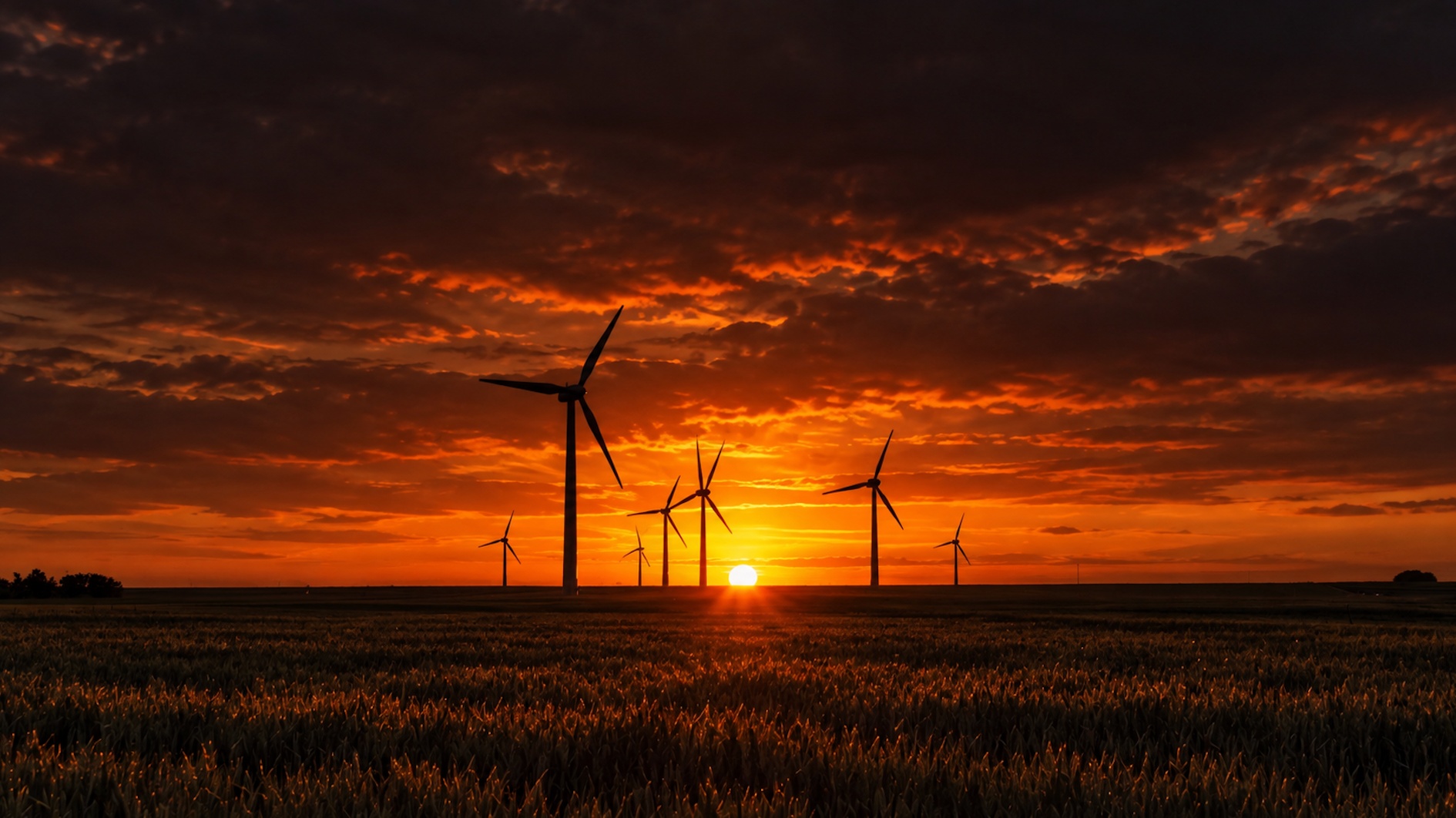
Today, the commitment to clean energy is not only transforming the planet, it is also changing the way business is done. In this context, land leasing for the installation of wind farms has become an attractive business model for landowners, allowing them to generate steady, long-term income by utilizing spaces that were often previously underused.
However, unlike renting a commercial space, a warehouse, or farmland for crops, leasing land for a wind farm has its own set of rules. Whether you work in the energy, real estate, or legal sectors, or are simply passionate about business and renewable energy, these are the fundamental characteristics you should know about how these contracts work:
1. They have a significant term (30 years or more) and the project is divided into stages.
Wind farms require significant capital investment, so the developer needs to secure land tenure for decades. To this end, lease agreements typically include different stages, each with specific objectives and conditions, which are generally structured as follows:
(a) Development Stage (2 to 5 years). During this stage, wind strength is evaluated using measurement towers, environmental impacts are analyzed, permits are managed with authorities , and, where applicable, financing is secured from banks and investors.
(b) Construction Stage (1 to 2 years). During this stage, access roads are opened, and wiring, structures, wind turbines, and other project infrastructure are built and installed.
(c) Operation Stage (20 years). This is the main stage of the project, during which the generation, commercialization, and operation of the project take place.
(d) Decommissioning (1 to 2 years): This is the final stage of the project's useful life, where equipment is removed, foundations are demolished, and the necessary work is carried out to vacate and restore the land in accordance with the obligations set forth in the contract and applicable regulations.
2. They feature a variable and progressive rent structure.
Rent is usually not a fixed amount, but rather a variable scheme designed to protect the project's financial viability in its early stages and maximize profits during its productive phase.
Generally, during the development stage, no rent is charged while the developer invests in studies and secures financing for the project.
On the other hand, during the construction and decommissioning stages, a low, fixed payment per hectare of land is usually agreed upon, which is adjusted annually for inflation.
The most significant aspect occurs during the operation stage, as this is the project's productive phase, and two schemes are generally considered to determine rent. On one hand, a variable rent linked to the wind farm's performance can be established, calculated as a percentage of the revenue derived from energy generation. On the other, a fixed rent can be set based on installed capacity, which may include adjustment mechanisms to protect its value against inflation.
3. They allow for the continuation of pre-existing activities on the land.
Unlike photovoltaic solar farms, which require continuous occupation of the land surface, wind farms concentrate much of their infrastructure in specific spots and along the access roads necessary for their operation. This allows a significant portion of the property to remain dedicated to its pre-existing productive uses, particularly agriculture or livestock.
4. They provide detailed regulations regarding the developer's rights to use, access, and occupy the property.
Due to the nature of wind farms, the developer needs not only to use the areas where the wind turbines will be installed but also to have access, internal roads, transmission lines, cabling, substations, maneuvering areas, and other facilities necessary for the project's construction and operation.
Therefore, the contract must clearly define the areas that may be occupied, the rights of access and transit, as well as the works and installations that the developer may carry out on the property.
5. They establish regulatory and environmental compliance obligations for the developer.
Due to the nature of the project, the developer must contractually assume the obligation to obtain and maintain in effect the permits, authorizations, licenses, and other requirements necessary for the development, construction, operation, and decommissioning of the wind farm, as well as to comply with applicable regulations, particularly in environmental matters, throughout the entire term of the project.
6. They include guarantees for decommissioning and land restoration.
One of the most relevant aspects for protecting the landowner's assets lies in the obligations set forth for the project's termination. The contract must clearly establish the developer's obligations regarding the dismantling of facilities, removal of infrastructure, and restoration of the property, as well as the mechanisms to ensure compliance. Among other aspects, it is advisable to include:
(a) The removal of wind turbines, equipment, structures, components, and other facilities linked to the project once its operation has concluded.
(b) The removal or demolition of foundations and other permanent works, under the terms and to the depth that may be contractually established and in accordance with applicable regulations.
(c) The execution of the work necessary to restore the property so that it can continue to be used for permitted purposes and, where applicable, for the productive activities carried out on it.
(d) The establishment of sufficient guarantees to back the decommissioning obligations, which may consist of, among other mechanisms, reserve funds, bonds, letters of credit, or bank guarantees, under the terms and in the amounts determined contractually.
In conclusion, if you are involved in these types of projects, it is important to keep in mind that leasing land for the installation of a wind farm is not a conventional real estate contract. It is a long-term contractual relationship that involves real estate, technical, financial, and regulatory aspects.
Therefore, properly structuring the contract is essential to define the rights and obligations of the parties, provide legal certainty throughout the various stages of the project, and protect both the owner's interests and the project's viability.
Is your company considering leasing land for a wind farm, or are you a landowner looking to structure a contract that protects your assets in the long term? At RRQB Legal Solutions, we assist developers and landowners in the negotiation and drafting of these types of agreements. Contact us for professional advice.